

Yella Beezy murder trial's 2nd week wraps with defense cross-examining lead detective
Yella Beezy trial | Dallas News Live
Casey Stegall speaks with an attorney about the ongoing testimony in the murder trial against rapper Yella Beezy.
DALLAS - The trial for Yella Beezy, who is accused of orchestrating a murder for hire plot that killed Dallas rapper MO3, is now in its second week.
Yella Beezy, whose real name is Markies Conway, is accused of paying another man to gun down MO3, whose real name is Melvin Noble, in an ambush on Interstate 35 in Dallas in 2020.
Prosecutors allege Conway hired Kewon White to carry out the murder over a long-running feud.
Conway has pleaded not guilty to capital murder and denied involvement.
White has already been convicted of capital murder for Noble’s death.
A third defendant, Devin Brown, is also charged with capital murder.
Conway's trial is expected to last about two weeks.
Live Updates
4:30 p.m. Jury dismissed
The judge dismissed jurors for the day, ordering them to avoid social media, discussing the case, or forming any opinions over the weekend.
Outside the presence of the jury, she listened to the state's legal challenge to the defense's video evidence. Prosecutors argued Brown's videos, social media posts, and statements were hearsay. The judge sustained the objection regarding any audio containing statements by Brown. And with the matter settled, court was adjourned until Monday morning.
4:10 p.m. Alternative theories
Shook challenged claims that Conway booked an extended 26-day California hotel stay around the murder, introducing records showing the trip was originally scheduled for only three days before his family joined him.
Turning to informant Cedric Bradley, Shook highlighted that Bradley initially claimed to know nothing about Noble's murder. Bradley only implicated White after facing decades behind bars and potential federal RICO charges during unrecorded debriefs.
Finally, Shook laid out an alternate motive focused on co-defendant Devin Brown. Jurors heard about Brown's toxic past with the mother of his children, who had begun dating MO3. Shook pointed to evidence that MO3 posted a video putting diamond chains and cash on Brown’s young sons, publicly humiliating and enraging Brown shortly before the fatal shooting.
Shook to play videos for the jury from late 2020 showing Brown with bundles of cash. A July 2020 video depicted Brown feeding stacks of $100 and $20 bills through an automated money-counting machine at a home on Britton Avenue. A second video, dated Oct, 13, 2020 showed Brown handling large bundles of cash. Shook argued the footage proved Brown had independent funds available to finance an attack following his September feud with Noble over his children and jewelry.
3:45 p.m. Video shows Yella Beezy's crisp $100 bill
Shook confronted Barnes with Conway’s 2020 Chase Bank records in an attempt to debunk the prosecution's claim that a $40,000 cash withdrawal on Nov. 20 was earmarked for a hit. He established that large cash withdrawals in $100 and $50 bills were standard for the artist following a $350,000 record label wire transfer. The detective admitted he had no direct knowledge of how Conway spent the cash, agreeing that luxury purchases and cash spending fit the artist's lifestyle.
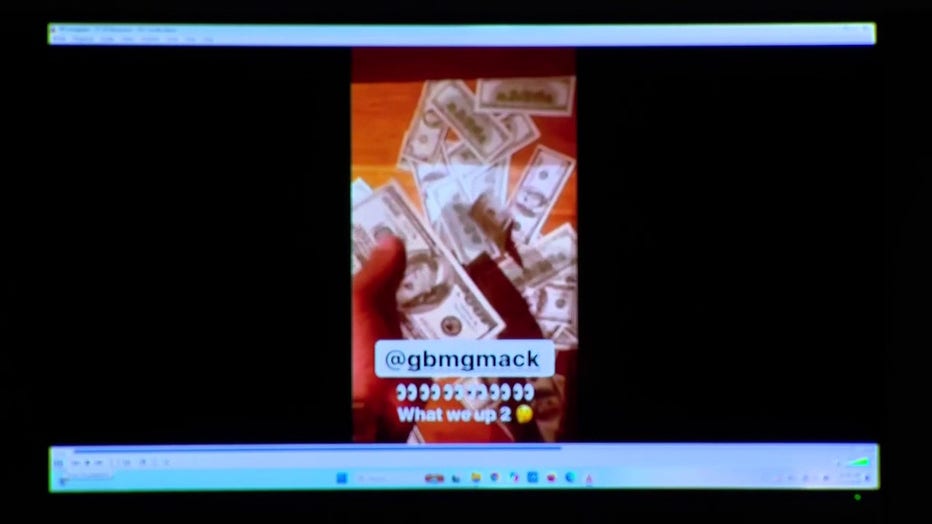
Shook then showed jurors an Instagram video from Nov. 23, 2020, hours before Conway flew to Los Angeles, showing Conway dealing out dozens of crisp $100 bills on a table. The defense argued this demonstrated Conway still possessed his bank funds days after the murder, directly countering the state's theory that the money had been handed off to fund the ambush.
2:45 p.m. Cash bundles scrutinized
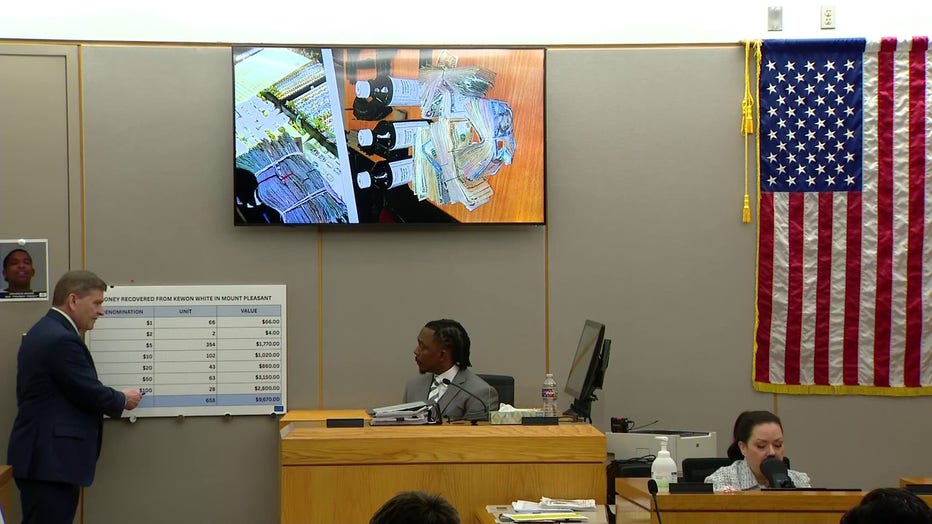
Shook questioned Barnes about the surveillance footage and physical evidence, revealing that White possessed identical bundles of cash — bound with matching colored rubber bands in small denominations like $1s, $5s, and $10s — at an Arlington jewelry store, long before any alleged meetup at Conway’s residence.
The detective admitted the bank withdrawal consisted of $100 and $50 bills, and the Federal Reserve could not trace the recovered bills back to Conway’s bank. When the detective suggested the money might have been "swapped out" at a trap house, Shook pushed back, arguing the state’s cell phone and cash evidence relies on guesswork rather than direct proof.
Shook confronted Barnes with surveillance images from the Ramona Avenue house on Nov. 23, 2020. He focused on an unidentified woman seen near the vehicle before White left Dallas. White was arrested in Titus County alongside a female passenger, but Barnes admitted neither he nor Dallas police ever interviewed her to determine whether cash was exchanged. Barnes defended the omission, stating recorded jail calls proved the seized money belonged to White.
1:45 p.m. Cross-examination continues
Defense attorney Toby Shook aggressively questioned Dallas Police Det. Eric Barnes over conflicting witness statements and cell tower records. Shook pressed Barnes on testimony from key witness Theodore Thomas (Jose Bodega), who told a grand jury that a pivotal conversation involving Markies Conway took place outside Jerry Johnson's Oak Cliff barbershop. However, Shook revealed FBI analysis showed Conway’s cell phone never connected to cell towers near South Dallas during that late November 2020 window. Instead, records placed Conway’s phone roughly 40 miles north in Frisco. Barnes maintained that cell data alone is not conclusive proof of someone's physical whereabouts, noting people can turn off or leave phones behind. Still, Barnes acknowledged police had no corroborating evidence placing Conway at the barbershop.
The defense also hammered Barnes over Thomas’s shifting accounts and potential motives to cooperate. Shook noted Thomas previously denied Conway's involvement in 2022 before agreeing to an interview in 2024, after which his federal firearm and drug conspiracy charges were dismissed. Barnes insisted there was no prearranged deal during Thomas's interview.
12 p.m. Lunch break
The court took a one-hour recess for lunch. Testimony should resume around 1:15 p.m.
11:40 a.m. Defense cross-examination
On cross-examination, defense attorneys pressed Barnes on procedural anomalies, highlighting that Conway was never issued a standard arrest warrant affidavit and was instead indicted directly by a grand jury years later.
The defense also scrutinized key informant Theodore Thomas, suggesting he only came forward with claims of an overheard SUV confession after facing life in prison under potential federal RICO charges. Barnes testified that investigators utilized cell tower data plotted by the FBI alongside airline records to trace Conway's travel between Dallas and California around the November 2020 shooting, which authorities used to corroborate witness accounts.
11:30 a.m. Conway's text messages to his girlfriend
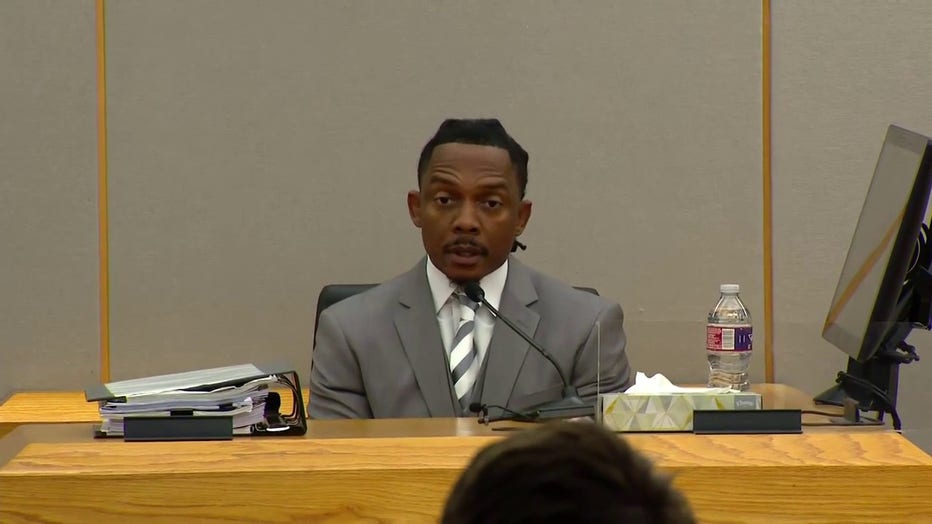
Det. Barnes walked the jury through surveillance photos from Nov. 3, 2020. The stills captured several of the defendants—some donning "OBG" necklaces and shoulder holsters—gathering at a residence before their phones pinged together near Jerry Johnson's barbershop later that day.
But testimony stalled when Prosecutor Tommy Adams moved to admit an iCloud text thread from Conway to his girlfriend dated Nov. 9, 2020, just two days before MO3 was ambushed and killed on I-35E. In the exchange, Conway allegedly stated he had people who "will do the shootings" for him. Defense attorneys objected, arguing the messages were unfairly prejudicial, lacked proper discovery notice, and merely amounted to vague bragging rather than murder-for-hire evidence. Adams countered that the texts directly prove Conway possessed the means and personnel to execute the hit.
Judge Chika Anyiam ultimately overruled the defense’s objections, allowing a redacted version of the text exchange. "We all told him, don't grab no gun. We got other [men] for that," one of Conway's texts said. The judge then sustained a defense objection when the state attempted to tie the message to an alleged murder-for-hire plot.
10:30 a.m. Jailhouse call won't be played for jurors
Prosecutors and defense attorneys sparred over whether jurors should hear a recorded jail call from convicted hitman Kewon White. White was arrested in Mount Pleasant shortly after the November 2020 ambush that left Dallas rapper MO3 dead on I-35E.
The state argued that White’s jail call in which he allegedly complained that police seized his money after he was "paid 20 bands" should be admitted as evidence. They said the recording directly corroborates text messages, cell tower location data, and surveillance video showing cash moving from hands to fund the alleged murder-for-hire plot.
The defense fired back, citing Texas case law (Dewberry v. State) to argue the statements are inadmissible hearsay. The defense attorney maintained that White’s post-booking remarks were neither spontaneous nor trustworthy, pointing out that White never named Conway as the source of the funds.
Judge Chika Anyiam ultimately sustained the defense’s objection in part, ruling the specific claim about getting paid was unfairly prejudicial. She said discussions about bail may be referenced, but prosecutors are barred from playing the audio for jurors to directly tie the cash payment to the defendant.
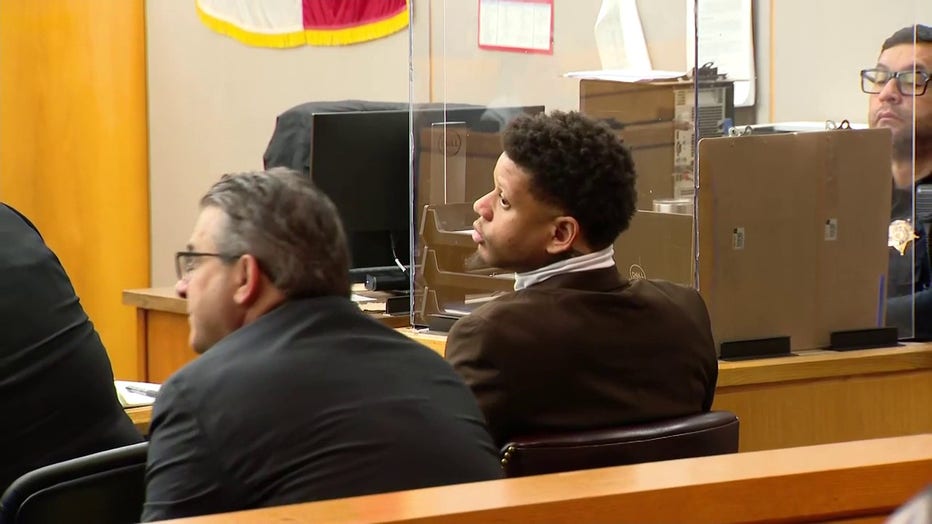
10:15 a.m. Payment timeline
Prosecutors mapped out the timeline for the alleged murder-for-hire payments. Det. Barnes walked the jury through cellphone records, surveillance video, and metadata linking the co-defendants on Nov. 22, 2020. According to Barnes, cell site data tracked a chain of meetups that evening: first in Irving between Conway and Devarius Moore (Trapboy Freddy), followed by a Frisco meeting between Conway and Jerry Johnson. Johnson was then tracked meeting convicted hitman Kewon White at a Dallas residence on Ramona Avenue.
Despite repeated defense objections alleging speculation over whether money changed hands, Barnes testified that White did not receive a single lump sum. Instead, investigators believe White received "front-end" payouts—including thousands in cash used for bond on the night of the murder, luxury shopping sprees, jewelry, and firearms. Nearly $9,670 in cash was found in his backpack during his Mount Pleasant arrest hours after the meetups. Records revealed Johnson bonded White out days later.
9:30 a.m. Detective's testimony continues
Dallas Police Det. Eric Barnes returned to the stand on Friday morning to walk the jury through the specific roles of several individuals tied to the investigation. Over defense objections regarding speculation and improper opinion, Judge Chika Anyiam allowed the testimony to proceed.
Barnes identified Kewon White as the hired "hitman" tasked with killing Melvin Noble (MO3), while Devin Brown, known as "Chicago," allegedly tracked the victim’s location to an apartment on Ramona Avenue. According to Barnes, Jerry Johnson served as the central middleman coordinating communications between White, Brown, and the defendant, Markies Conway (Yella Beezy).
The prosecution emphasized Conway’s alleged role as a "financier" alongside an associate, Devarius Moore (Trapboy Freddy).
9 a.m. Trial resumes
FOX 4 will have live coverage of the trial each day after testimony begins around 9 a.m.
Thursday's Recap
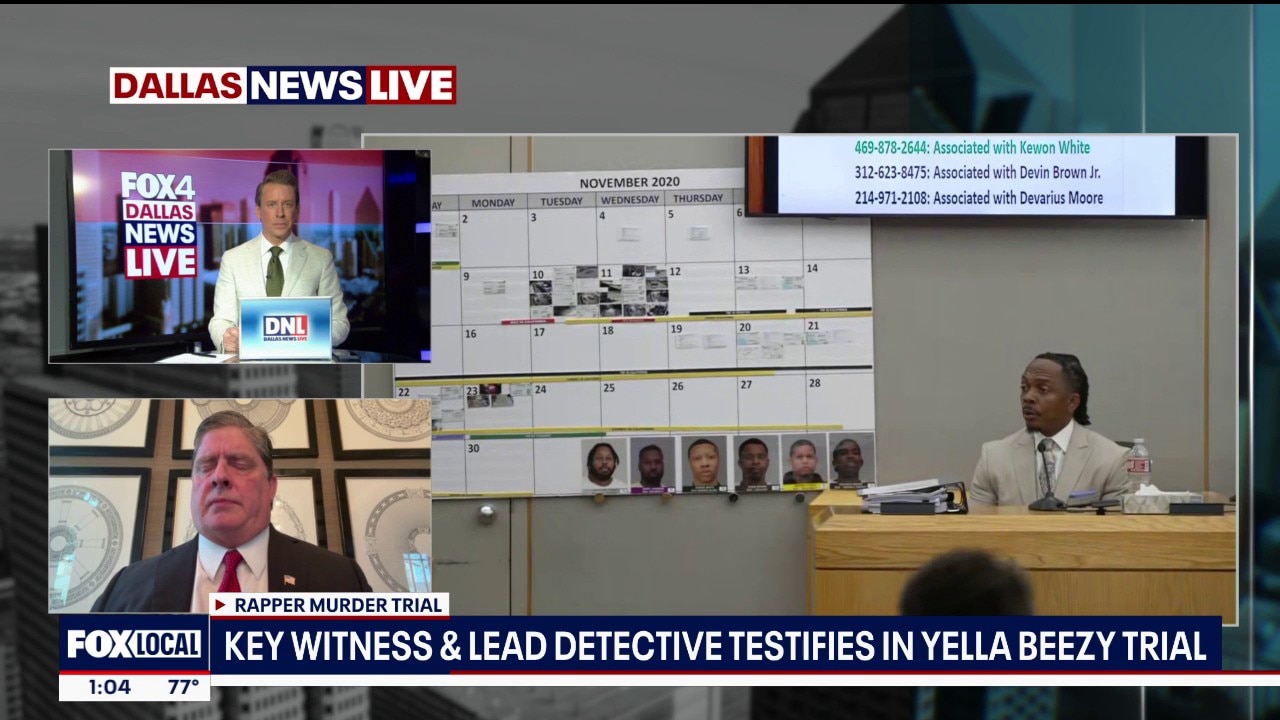
Key witness & lead detective testifies in Yella Beezy trial | Dallas News Live
Casey Stegall speaks to a former federal prosecutor about the ongoing Yella Beezy trial.
The trial on Thursday centered on testimony from lead investigator Det. Eric Barnes, who outlined the violent, escalating rivalry between Markies Conway (a.k.a. Yella Beezy) and Melvin Noble (a.k.a. MO3), alongside financial evidence suggesting a murder-for-hire plot.
The morning focused on the origins of the feud. Over defense objections, prosecutors presented a timeline linking the conflict back to 2017 and 2018 shootings, including an incident where Conway was shot and lost his spleen. Through music videos, social media clips, and a 2019 DJ Vlad interview, prosecutors highlighted Conway’s retaliatory mindset, noting his statements that street conflicts are "two for two" and illustrated tensions surrounding a 2019 Frisco concert where Noble was arrested to preempt violence.
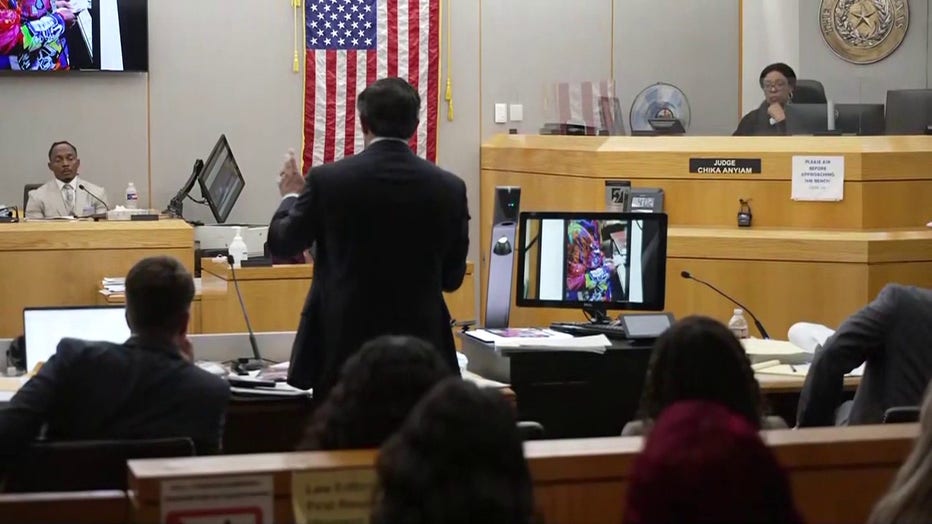
In the afternoon, the state showcased surveillance from January 2020 showing Conway assaulting Noble’s manager, Brandon Rainwater. Videos revealed Conway boasting about the attack, Noble mocking Conway’s claims, and Conway subsequently releasing the track "Keep It in the Streets" after Rainwater filed a civil lawsuit. Barnes testified this music promoted handling disputes outside the legal system.
The state concluded the day by examining financial records and digital communications surrounding the November 2020 murder. Barnes linked Conway to a late-October $40,000 cash withdrawal before performing alongside the convicted gunman in Houston. The judge temporarily withheld a November 2020 jailhouse recording regarding a "20 bands" payout pending corroborating evidence. However, the court admitted extracted iCloud messages showing Conway withdrawing another $40,000 on Nov. 20, 2020, followed by urgent texts with associates coordinating meetups before both Conway and White left town.
MO3 Murder

VIDEO: Rapper Mo3 chased down by hitman on I-35
Prosecutors released video of rapper Mo3 being shot at and chased down by a hitman on I-35 in Dallas. The video was shown during a bond hearing for fellow rapper Yella Beezy who allegedly hired the hitman Kewon Dontrell White.
MO3 was shot 11 times and killed on I-35 back in 2020. Prosecutors allege the shooting was part of a murder-for-hire plot organized by rapper Yella Beezy, whose legal name is Markies Conway. They claim he paid Kewon White to carry out the murder over a long-running feud.
In September, jurors found White guilty of capital murder and sentenced him to life in prison after viewing video and hearing testimony about the shooting. Prosecutors also presented evidence of an alleged payment from Conway to White.
Conway has pleaded not guilty to capital murder and denied involvement. His trial was delayed by a month so that his lawyers could get a copy of White’s trial transcript.
A third defendant, Devin Brown, is also charged with capital murder.
Continued Coverage
- Day 8: Jurors in Yella Beezy murder trial watch rap videos, hear testimony from lead detective
- Day 7: Key witness, lead detective take the stand in Yella Beezy's murder-for-hire trial
- Day 6: Jurors in Yella Beezy's capital murder trial hear testimony on cellphone locations
- Day 5: Yella Beezy murder trial key witness Theodore Thomas claims he lied in grand jury testimony
- Day 4: Yella Beezy murder trial key witness doesn't testify, ordered to return on Wednesday
- Day 3: Yella Beezy murder trial continues on Day 3 with testimony from informant Jose Bodega
- Day 2: Yella Beezy murder trial testimony on Day 2 focuses on crime scene evidence, surveillance photos
- Day 1: Yella Beezy on trial for Dallas rapper MO3's murder
- Jury seated in Dallas rapper Yella Beezy’s capital murder trial
- Kewon White’s lawyers seeking a new trial over sleepy juror
- Kewon White files appeal in MO3 murder conviction
- Kewon White found guilty, sentenced to life in prison for MO3's murder
The Source: The information in this story comes from trial testimony and past news coverage.