

Texas high schools face mandatory heat safety rules for outdoor activities starting Aug. 1

UIL announces mandated heat protocols and procedures
Today the UIL is announcing a new heat policy for all outdoor sports and marching band activities. This comes after a student athlete at Lancaster ISD died after suffering heat stroke. Fox 4’s Payton May has more on the latest protocols.
LANCASTER, Texas - Stricter heat-safety standards for Texas high school athletics and marching bands will become mandatory statewide on Aug. 1, following a formal rule change by the University Interscholastic League.
Mandatory Heat Safety
Beginning with the 2026–2027 school year, all UIL member schools will be required to use Wet Bulb Globe Temperature (WBGT) monitoring to guide activity modifications, replacing previous recommendations with enforced regional thresholds, required practice adjustments, and mandatory rapid-cooling zones.
The backstory:
The policy overhaul follows several high-profile heat tragedies across the state, including the August 2025 death of 15-year-old Preston Malone III. Malone, a sophomore and junior varsity football player at Lancaster Early College High School, died from exertional heat stroke after collapsing during a team practice.
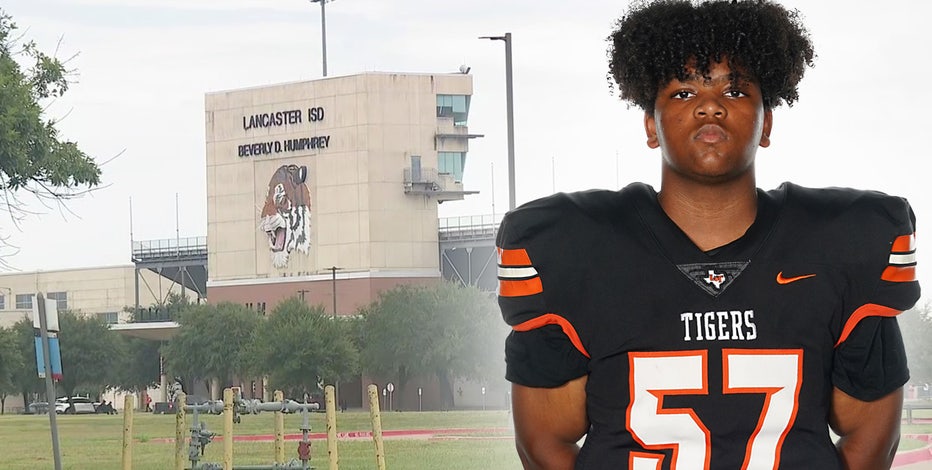
Lancaster football player dies after suffering heat emergency during practice
A sophomore football player at Lancaster High School died on Wednesday after suffering a medical emergency during practice on Monday.
While the UIL approved WBGT as a recommended measurement in 2023, the UIL Medical Advisory Committee recently recommended making the guidelines mandatory. The UIL Legislative Council subsequently approved the measure.
What is WBGT?
Dig deeper:
Unlike standard thermometer readings or heat index values, WBGT uses three separate thermometers to estimate environmental heat stress by factoring in temperature, relative humidity, wind speed, and solar radiation.
Under the new mandates, adapted from American College of Sports Medicine guidelines, schools must use local WBGT readings to adjust work-to-rest ratios, limit heavy equipment and uniform gear, schedule mandated hydration breaks, or terminate outdoor practices altogether when conditions cross critical thresholds.
The rules also require schools to maintain designated rapid-cooling infrastructure onsite, such as cold-water immersion tubs or tarps, during high-heat conditions.
The Source: Information in this article is from UIL and previous reporting.